News Story
BIOE Announces Fall 2025 Instructional Impact Awards
The Fischell Department of Bioengineering (BIOE) announced the three recipients of the Instructional Impact Awards for the Fall 2025 semester. Assistant Professor Erika Moore, second-year master’s student Farshad Mashhadi, and Senior bioengineering major Emilee Yuan were selected as recipients of this semester’s department Impact Awards. These student-nominated awards honor one faculty member, one graduate teaching assistant (GTA), and one undergraduate teaching fellow (UTF) each semester for their dedication and contributions to student success.
Faculty Instructional Impact Award
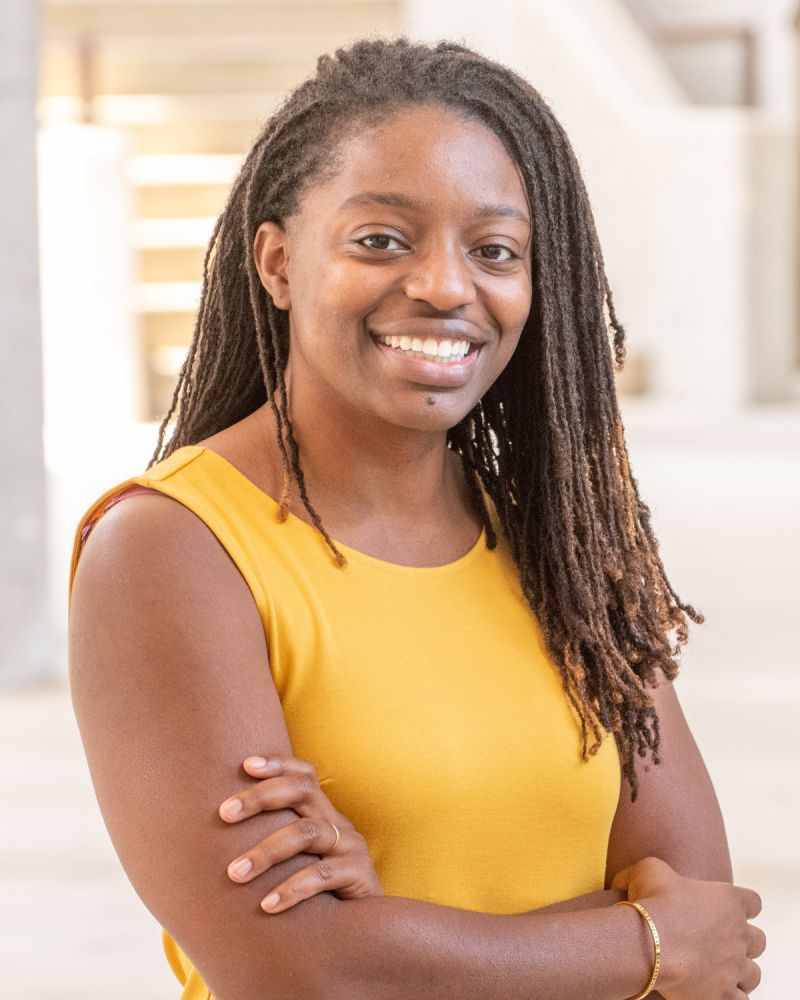
Erika Moore
Assistant Professor
BIOE Assistant Professor Erika Moore received the Faculty Instructional Impact Award for her commitment to creating an engaging, application-focused learning environment for students in BIOE453: Biomaterials. Moore’s teaching emphasizes helping students connect core concepts to real-world biomedical challenges while building a deeper understanding of how engineering can address health inequities.
Moore designs her courses to prioritize learning over memorization, structuring exams and assignments around real-world applications such as experimental design. This approach encourages students to think critically about how biomaterials are used in practice and to engage more deeply with the material. She also incorporates hands-on experiences, including a field trip to Integra LifeSciences, a global medical technology company. This trip allowed students to observe how the concepts discussed in class translate into real-world biomedical settings.
“Dr. Moore consistently demonstrated an exceptional commitment to advancing student learning, organization, and engagement.” One student nomination said. “She structured the course into clear weekly modules, each with detailed outlines and thoughtfully prepared activities that made challenging material approachable and meaningful. Beyond her instructional excellence, Dr. Moore fostered a deeply supportive and engaging classroom environment. She made a genuine effort to learn every student’s name and build personal connections, creating a space where students felt seen and encouraged.”
Her teachings are supported by her work as principal investigator of the Moore Lab , where her research focuses on engineering biomaterial models to study immune function and address disparities in human health. The lab investigates how immune cells interact with blood vessels in conditions such as lupus, with the goal of improving early detection of complications like vasculitis. She additionally explores how aging impacts macrophage function and tissue regeneration, as well as how ancestry and lived experiences influence immune responses and wound healing outcomes.
Moore also leads work examining how the extracellular matrix directs immune cell behavior and contributes to tissue repair, and how biomaterial systems can be used to better understand conditions such as uterine fibroids, which disproportionately affect Black women. Across these areas, her research highlights the importance of designing more inclusive and representative biomedical models to improve treatment strategies.
GTA Instructional Impact Award
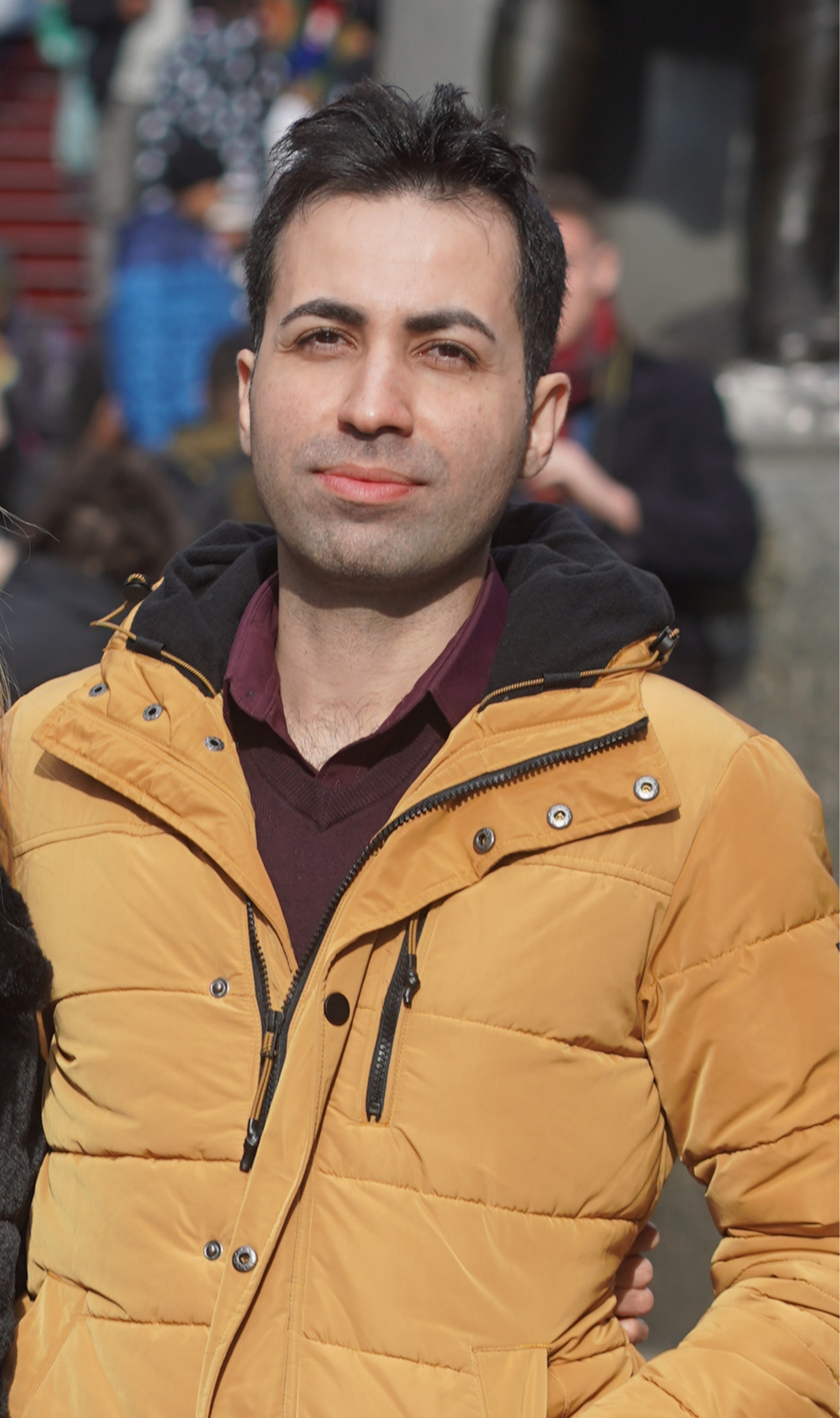
Farshad Mashhadi
2nd-Year Master’s Student
BIOE Graduate student Farshad Mashhadi received the Graduate Instructional Impact Award for his role in supporting hands-on learning courses, including BIOE121, BIOE340, and BIOE488. As a second-year master’s student in biomedical engineering, Mashhadi manages and operates the department’s instructional laboratories, which support courses.
In this role, he oversees day-to-day lab operations, including maintaining inventory, preparing experimental setups, and ensuring that all materials and equipment are available and functioning. The laboratories he supports expose students to a wide range of techniques, such as DNA extraction, PCR, gel electrophoresis, cell culture and passaging, dissection, and protein assays. His work ensures that students can engage in complex molecular and cellular biology experiments within a structured and well-supported environment.
Mashhadi’s contributions extend beyond operational management. He plays a key role in guiding students through experimental design, troubleshooting procedures, and understanding the scientific principles behind their work. He regularly provides detailed feedback on lab methods and helps students refine their techniques, particularly during open-ended and project-based assignments. His ability to break down complex concepts and connect theory to practice has contributed to a more accessible and effective learning experience in the lab.
He is also known for his strong commitment to student support and accessibility. Mashhadi frequently makes himself available outside of scheduled lab times, including evenings and weekends, to assist students with projects, answer questions, and provide additional guidance. He maintains consistent communication and ensures that students feel supported throughout the course, particularly during more demanding assignments and final projects.
His approach is shaped by his own academic journey and experiences as a non-traditional student. During his undergraduate studies at the University of Maryland, he received the Clark Opportunity Transfer Scholars Program Policy Scholarship (COTS) along with additional merit-based recognitions. These experiences shape his commitment to supporting students both academically and personally, and to creating a lab environment where all students have the opportunity to succeed.
“Those awards mattered to me because I was a non-traditional student and an immigrant, and they felt like UMD was saying, 'we see your work.” Now being recognized again through the Instructional Impact Award feels like a full-circle moment, this time not just for grades, but for the way I show up for students.” Mashhadi said.
UTF Instructional Impact Award
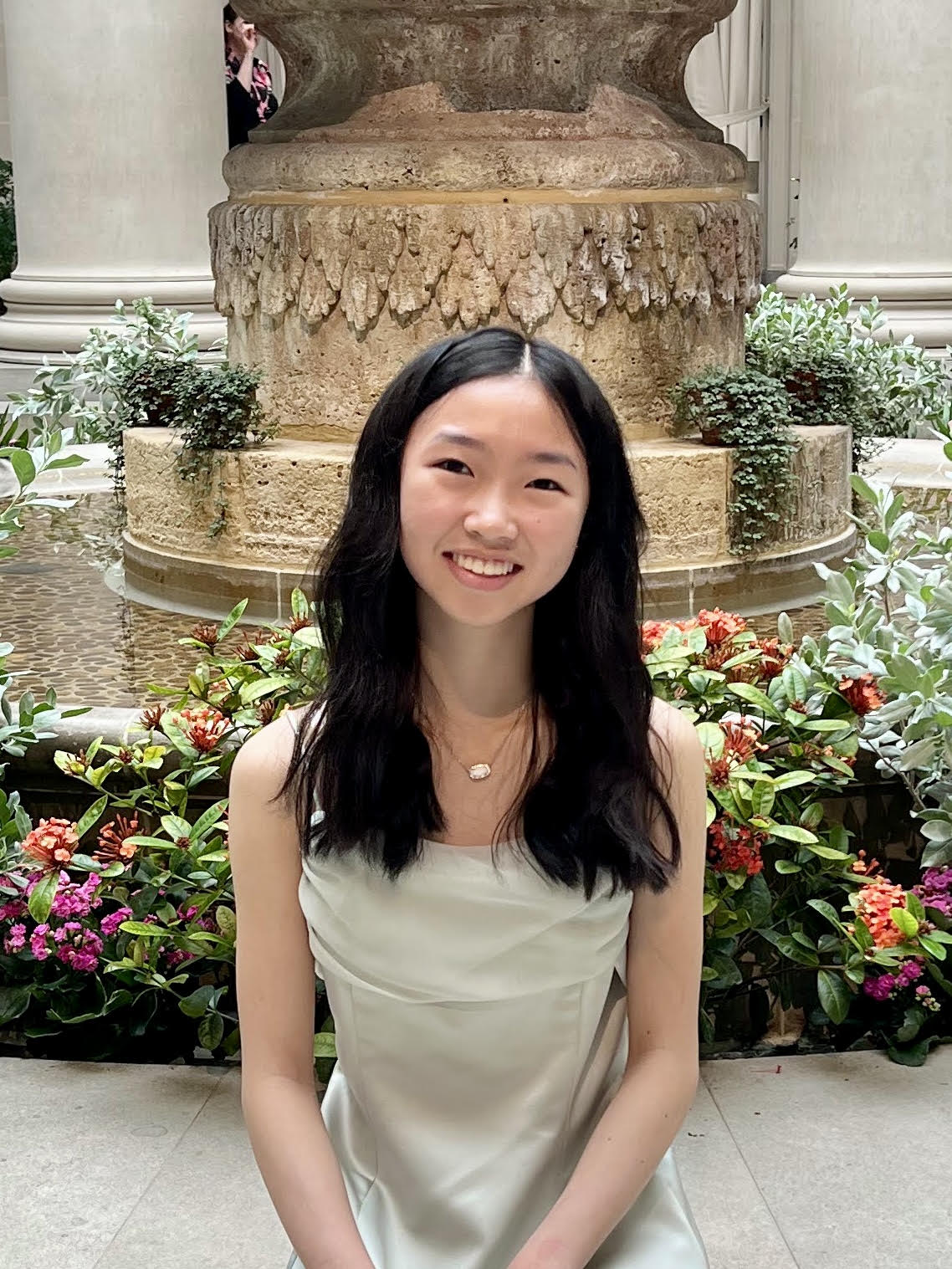
Emilee Yuan
Senior Undergraduate
BIOE Undergraduate Teaching Fellow Emilee Yuan received the Undergraduate Instructional Impact Award for her dedication to supporting student learning in BIOE340: Modeling Physiological Systems and Lab. As a senior bioengineering major on the pre-health track, Yuan plans to attend medical school and brings both academic and research experience into her teaching.
Yuan has conducted research at the Food and Drug Administration (FDA) within the Center for Devices and Radiological Health (CDRH) , where she focused on developing regulatory tests to assess the thrombogenicity of biomedical devices and biomaterials. She is also a member of the Integrated Life Sciences Honors College and serves as a board member of the AEMB Biomedical Engineering Honors Society.
In her role as a teaching fellow, Yuan is known for creating structured and accessible learning opportunities that help students navigate complex course material. She regularly organizes and leads extended review sessions ahead of exams, using detailed, professor-aligned slides to reinforce key concepts and guide students’ preparation. She also communicates frequently with students outside of class, offering support through email and adapting session times to maximize attendance.
“She was such a helpful TA who always went above and beyond to ensure all of my classmates understood the material for our Modeling Physiology course,” one student nomination noted. “From her exam reviews to the detailed slides she creates, you can tell she really cares about providing us all the tools to succeed in BIOE340. Her teaching style is sincere, and she often gives us tips from her perspective when she was taking this course, which helps a lot, given that the material can be hard to interpret solely from a faculty lecturer's perspective.”
Her commitment to student success is reflected in her accessibility, preparation, and ability to break down difficult material into manageable parts. Through consistent engagement and a student-centered approach, Yuan has played a key role in helping her peers build confidence and deepen their understanding of physiological modeling.
Published February 23, 2026
Related Stories
Stories / May 29, 2026
BIOE Announces Spring 2026 Instructional Impact Awards
Stories / June 16, 2025
BIOE Announces Spring 2025 Instructional Impact Awards
Stories / January 23, 2025
BIOE Announces Fall 2024 Instructional Impact Awards
Stories / June 28, 2024
BIOE Announces Spring 2024 Instructional Impact Awards
Stories / May 13, 2026
2026 Invention of the Year: Engineering Projects Top List

Stories / October 10, 2025
Stroka Appointed Associate Chair for Undergraduate Studies and...
Stories / September 3, 2026
UMD Convocation will honor five from the Clark School
Stories / August 4, 2026
Kuo Lab Hosts Future Bioengineers
Stories / June 25, 2026
Grand Challenges 2.0: Engineers Partner to Unlock Solutions

Stories / June 4, 2026
BIOE Graduate Program Receives Mentoring Excellence Award