News Story
Grace O’Connell Selected for National Academies New Voices Program
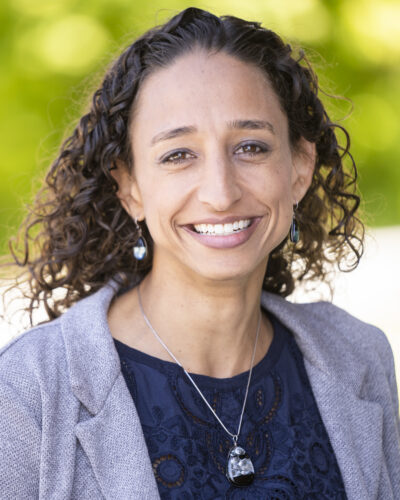
University of Maryland (UMD) alumna and Fischell Department of Bioengineering (BIOE) Advisory Board member Grace O’Connell, has been selected as one of 20 members of the 2026–2028 cohort of the National Academies of Sciences, Engineering, and Medicine’s New Voices in Sciences, Engineering, and Medicine program .
The New Voices program brings together mid-career scientists, engineers, and medical professionals from across academia, industry, and government for a two-year term. During that time, members contribute to National Academies activities, develop interdisciplinary projects, and help broaden the expertise shaping national conversations in science, engineering, and medicine.
“It’s an incredible honor to be selected as one of 20 participants in the National Academies' New Voices program,” O’Connell said. “Throughout my career, I’ve looked for ways to give back to both my scientific community and society more broadly. Being part of New Voices represents an opportunity to extend that service to a national level to help inform the future of science and engineering, contribute to important conversations, and support the role of research in addressing societal challenges.”
“It’s an incredible honor to be selected as one of 20 participants in the National Academies' New Voices program. Throughout my career, I’ve looked for ways to give back to both my scientific community and society more broadly. Being part of New Voices represents an opportunity to extend that service to a national level to help inform the future of science and engineering, contribute to important conversations, and support the role of research in addressing societal challenges.”
-Grace O’Connell
During her two-year term, O’Connell is especially interested in engaging across disciplines and sectors, including academia, national laboratories, and industry. She hopes to contribute to discussions about how artificial intelligence will transform the workplace, research, and education, and how those technologies can be developed and deployed in ways that enhance human expertise and broaden opportunity. She is also focused on the growing health challenges associated with an aging population. As longevity increases, issues related to mobility, musculoskeletal health, and quality of life become more urgent. O’Connell sees these topics as sitting at the intersection of engineering, medicine, and public policy, areas where interdisciplinary collaboration can help shape forward-looking solutions.
Currently, O’Connell is a professor of mechanical engineering at the University of California, Berkeley, where she directs the Berkeley Biomechanics Laboratory . Her research combines computational modeling and experimental methods to understand how soft tissues such as tendons, ligaments, and intervertebral discs respond to aging, injury, and disease. Her work focuses on musculoskeletal health and improving quality of life, particularly as populations live longer.
O'Connell '04 credits her time at UMD with shaping her perspective on leadership and service. As an undergraduate in UMD's Department of Aerospace Engineering , she observed the leadership of UMD President Darryll Pines, who was then serving as department chair. Over time, his commitment to advancing engineering education and broadening participation in STEM left a lasting impression.
More broadly, O’Connell said her experience at UMD instilled the idea that engineering leadership extends beyond research excellence to include shaping institutions, expanding access, and engaging with societal challenges. That perspective helped prepare her for opportunities like the New Voices program.
“Focus on building strong technical foundations, but don’t lose sight of why you entered the field in the first place. Leadership often emerges at the intersection of expertise and purpose. As opportunities present themselves, take time to reflect on where you can contribute most meaningfully. The ability to align your skills with societal needs is what ultimately distinguishes impactful scientific leaders.”
Published February 20, 2026
Related Stories
Stories / February 13, 2025
Marc Dandin Receives NSF CAREER Award
Stories / February 3, 2025
Callie Weber Earns Third Place in Dean's Ph.D. Research Award...
Stories / May 18, 2023
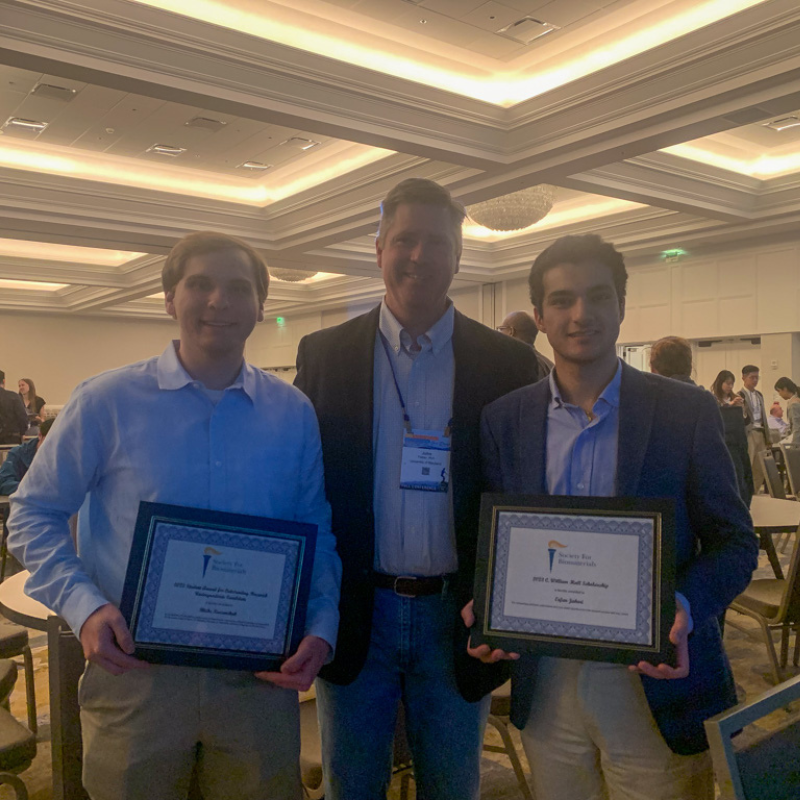
BIOE Student Researchers Receive 2023 SFB Awards
Stories / September 3, 2026
UMD Convocation will honor five from the Clark School
Stories / June 25, 2026
Grand Challenges 2.0: Engineers Partner to Unlock Solutions

Stories / June 4, 2026
BIOE Graduate Program Receives Mentoring Excellence Award
Stories / May 29, 2026
BIOE Announces Spring 2026 Instructional Impact Awards
Stories / May 13, 2026
2026 Invention of the Year: Engineering Projects Top List

Stories / April 14, 2026
BIOE Professor Erika Moore Named 2026 Ford Global Fellow

Stories / April 10, 2026
BIOE Mia Jocic Receives Clark School of Engineering Leadership...