News Story
BIOE Professor Erika Moore Named 2026 Ford Global Fellow

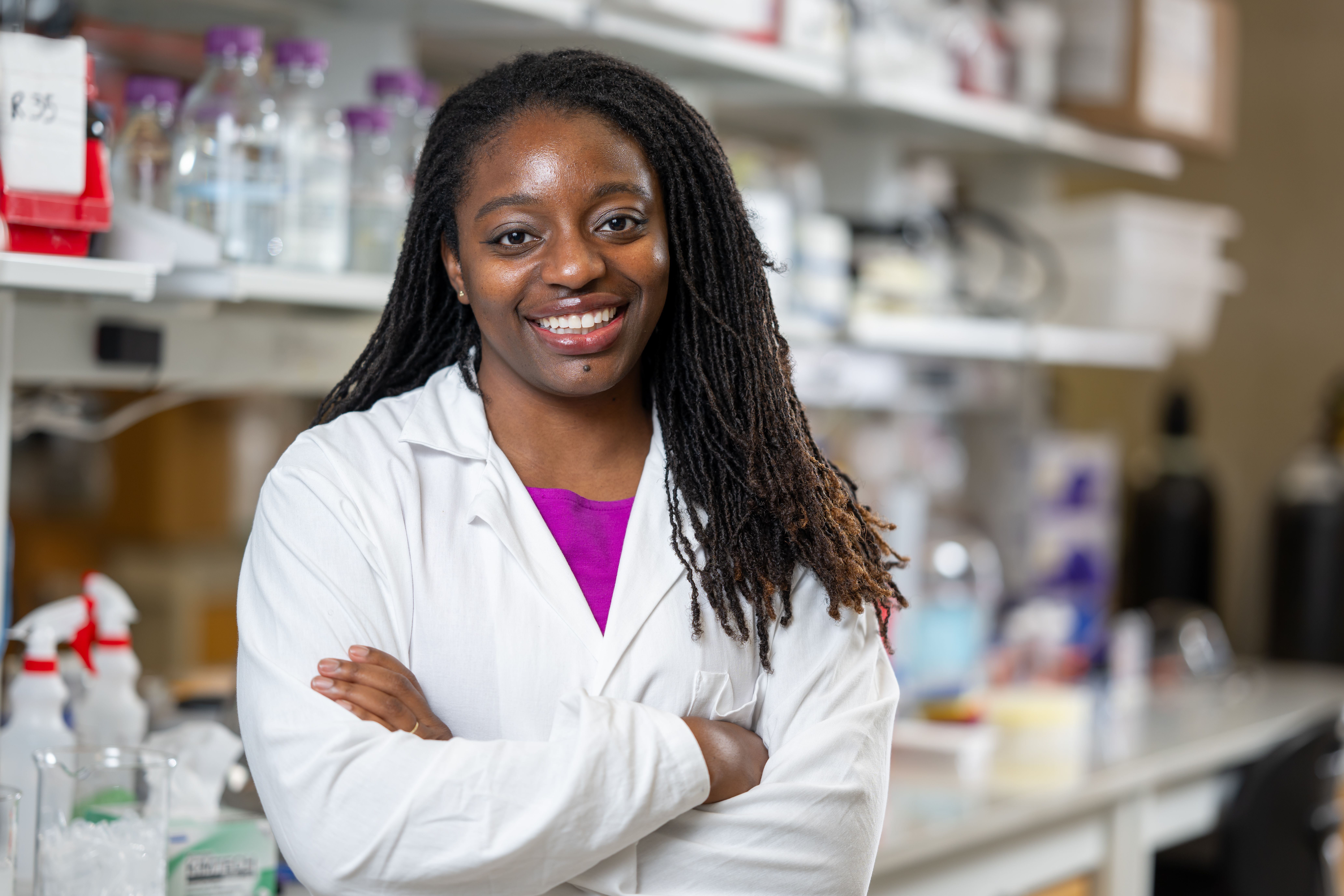
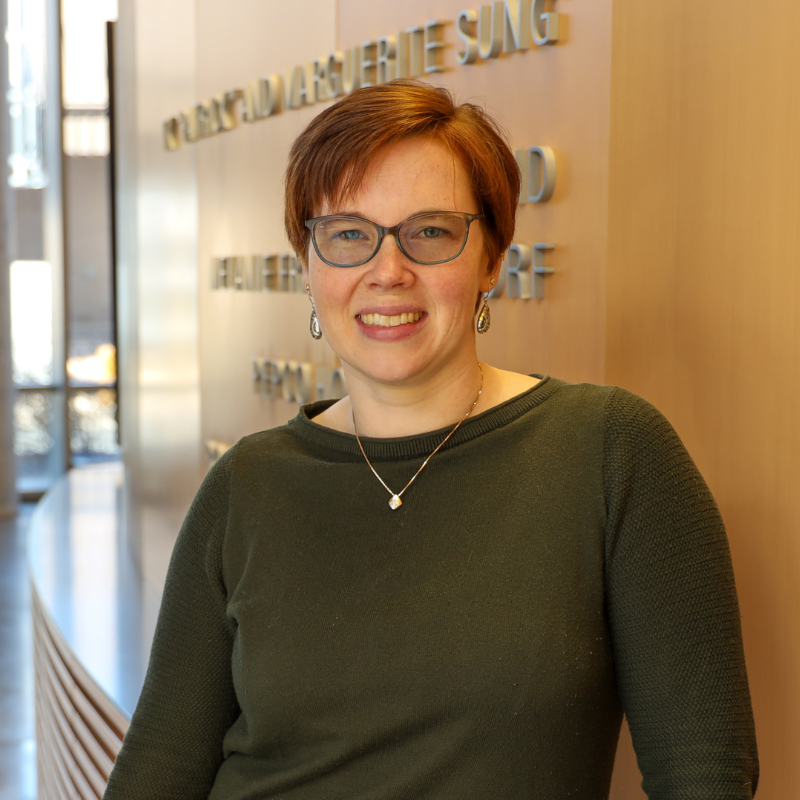
(Photo by Stephanie S. Cordle)
Erika Moore, an assistant professor in the Fischell Department of Bioengineering (BIOE) at the University of Maryland, has been named a 2026 Ford Global Fellow, joining a cohort of 32 leaders selected for their work advancing equity and addressing global inequalities.
The Ford Global Fellowship, launched by the Ford Foundation, brings together leaders from across sectors including science, engineering, education, and advocacy to collaborate on solutions to the world’s most pressing challenges. The 2026 cohort joins a growing global network of more than 150 fellows working across Africa, Asia, the Americas, and the Middle East.
Moore was selected for her work in biomedical engineering and her commitment to advancing equity in research and education. As principal investigator of the Moore Lab, she focuses on understanding how gaps in biomedical knowledge contribute to unequal health outcomes and how those gaps can be addressed through more inclusive research approaches.
“For me personally, it means having access to a broader cohort of international and global leaders who are actively working to understand how to create meaningful change and leverage their positions for the greater good,” Moore said.
Moore teaches and conducts research with a focus on embedding equity into biomedical engineering. In her classroom and lab, she challenges students to examine how scientific questions are formed and whose experiences are reflected in the data used to answer them. Her approach encourages students to critically evaluate established norms and identify opportunities to expand how biomedical problems are defined and studied.
Her research also explores how differences in biological and social factors contribute to disease outcomes. By shifting the focus of traditional research questions, Moore aims to uncover new insights into conditions that have historically been understudied or misunderstood.
"For me personally, it means having access to a broader cohort of international and global leaders who are actively working to understand how to create meaningful change and leverage their positions for the greater good."
-Erika Moore
Moore’s work is also shaped by her own experiences with fibroids, a condition that affects a majority of women and is disproportionately experienced by Black women. After facing limited treatment options herself, she began developing new research approaches to better understand the disease.
In her lab, Moore and her team have engineered one of the first three-dimensional models of fibroids, allowing researchers to study how the tumors grow and respond to potential treatments. The work represents an early step toward developing noninvasive therapies for a condition that is often treated through surgery.
Her research has also extended beyond the lab through partnerships with community organizations. At a recent Fibroid Summit hosted in collaboration with the Fibroid Foundation, Moore shared research from her lab with patients and community members, reinforcing the importance of connecting scientific work to real-world impact.
“My personal experiences with fibroids and other medical conditions have made me more aware of the gaps in what is currently known,” Moore said. “They have reinforced that I am in a position to contribute to expanding that knowledge.”
In addition to her research and teaching, Moore is involved with the University of Maryland Financial Wellness Center, where she serves as an advisor and supports initiatives aimed at improving student access to financial education.
Through the Ford Global Fellowship, Moore will collaborate with an international network of leaders working to strengthen equity and expand opportunity across disciplines and regions. She said the experience aligns closely with her work at Maryland and her broader goal of using biomedical engineering to drive meaningful change.
Published April 14, 2026
Related Stories
Stories / September 3, 2026
UMD Convocation will honor five from the Clark School
Stories / June 25, 2026
Grand Challenges 2.0: Engineers Partner to Unlock Solutions

Stories / May 29, 2026
BIOE Announces Spring 2026 Instructional Impact Awards
Stories / May 13, 2026
2026 Invention of the Year: Engineering Projects Top List

Stories / March 26, 2026
Edward Eisenstein Named 2025 AAAS Fellow
Stories / February 26, 2026
AIM Welcomes 5 Distinguished Artificial Intelligence Scholars

Stories / February 23, 2026
BIOE Announces Fall 2025 Instructional Impact Awards
Stories / October 10, 2025
Stroka Appointed Associate Chair for Undergraduate Studies and...
Stories / August 12, 2025
Katharina Maisel Named 2025 Outstanding Young Engineer
Stories / July 10, 2025
Edward Eisenstein Elected President of American Society for...