News Story
Four BIOE Students Named 2026 NSF Graduate Research Fellows

This month, the National Science Foundation (NSF) announced the winners of the 2026 NSF Graduate Research Fellowship Program (GRFP), where four Fischell Department of Bioengineering (BIOE) students were named recipients.
The NSF Graduate Research Fellowship Program was established to ensure the vitality and diversity of the United States' scientific and engineering workforce. The program recognizes outstanding graduate students who are pursuing full-time, research-based master’s and doctoral degrees in science, technology, engineering, and mathematics (STEM).
Chloe Connolly
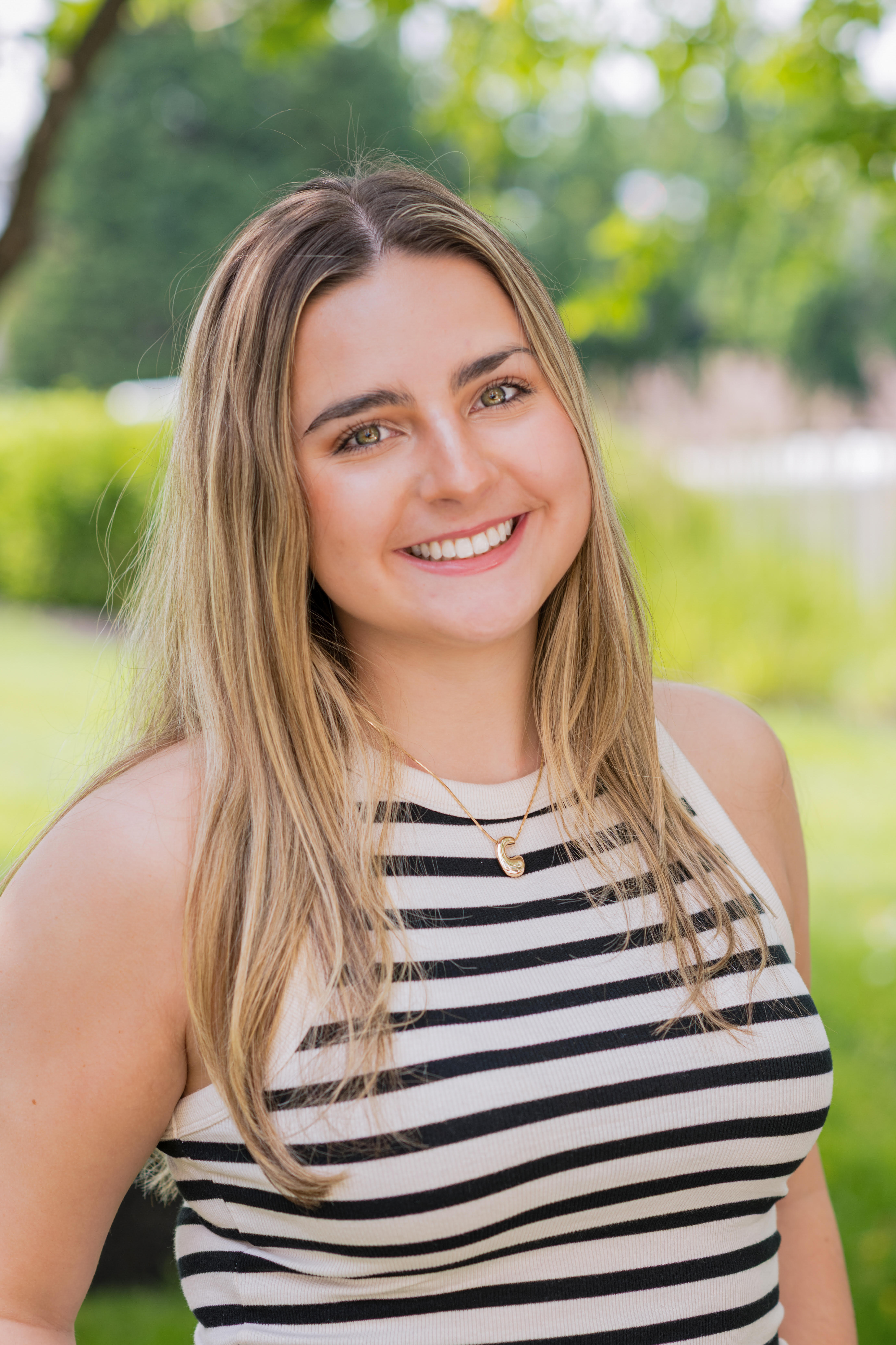
Chloe Connolly is an undergraduate researcher in Associate Professor Gregg Duncan’s Respiratory NanoBioengineering Lab. Her work focuses on biomaterials and drug delivery, including developing a biomaterial that can improve gene therapy delivery.
Connolly is interested in the complexity of biological systems and the need for better ways to deliver treatments to patients. She hopes to design new biomaterials that can target a wide range of diseases while minimizing immune responses.
“I was very honored to see my name on the NSF GRFP website! So many talented researchers apply for this award, and I feel incredibly grateful to be part of such an inspiring group of NSF GRFP fellows.” Connolly said.
This fall, Connolly will pursue a Ph.D. in bioengineering at the University of Pennsylvania, where she will design lipid nanoparticles for treating disease.
Renee Jaranson
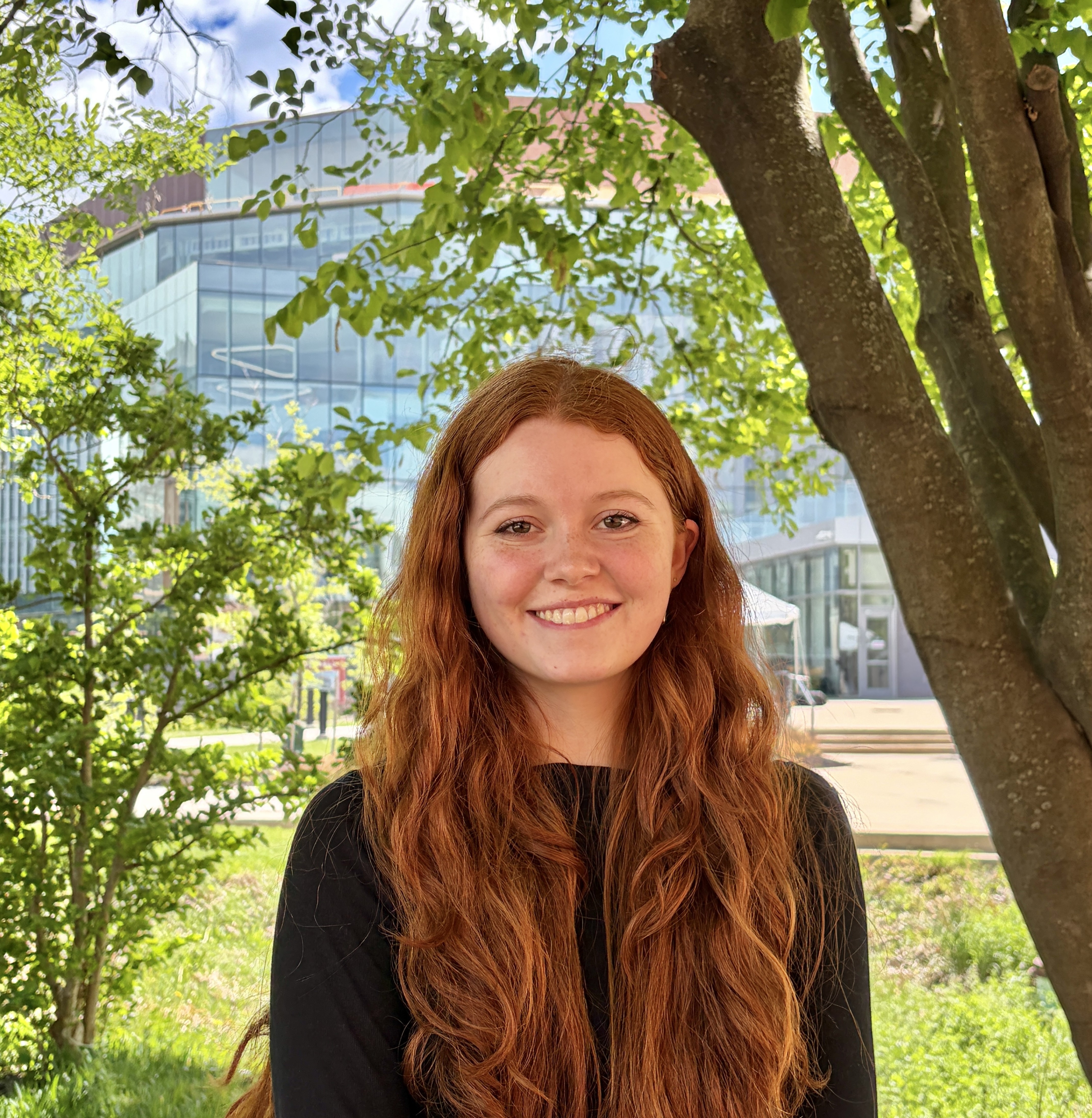
Renee Jaranson is a bioengineering senior interested in developing therapies for aggressive cancers, with research focused on nanotechnology, immunotherapy, and light- and ultrasound-based treatments.
Jaranson’s work in Professor Joe Huang ’s Optical Therapeutics & Nanotechnology Lab on light-based cancer therapies inspired her to pursue this field. She has contributed to projects ranging from early lab studies to a canine brain tumor clinical trial, where she saw how research can translate to real-world applications. This work led Jaranson to receive the Menon Endowed Scholarship, which provides her with additional funds to support her involvement.
“I am grateful for the support of my advisor, Dr. Huang, for encouraging me to apply and providing many research opportunities, as well as my mentors, Dr. Pavlos Anastasiadis, Dr. Kumaran Ramamurthi, and Dr. Shruti Vig, for their guidance and training. I also thank the Huang lab and UMaryland iGEM for their encouragement and support.” Jaranson said.
After completing a Ph.D. in bioengineering at the University of Maryland, she hopes to work in the biopharmaceutical industry to help bring new cancer therapies to the clinic.
Savannah Phillips
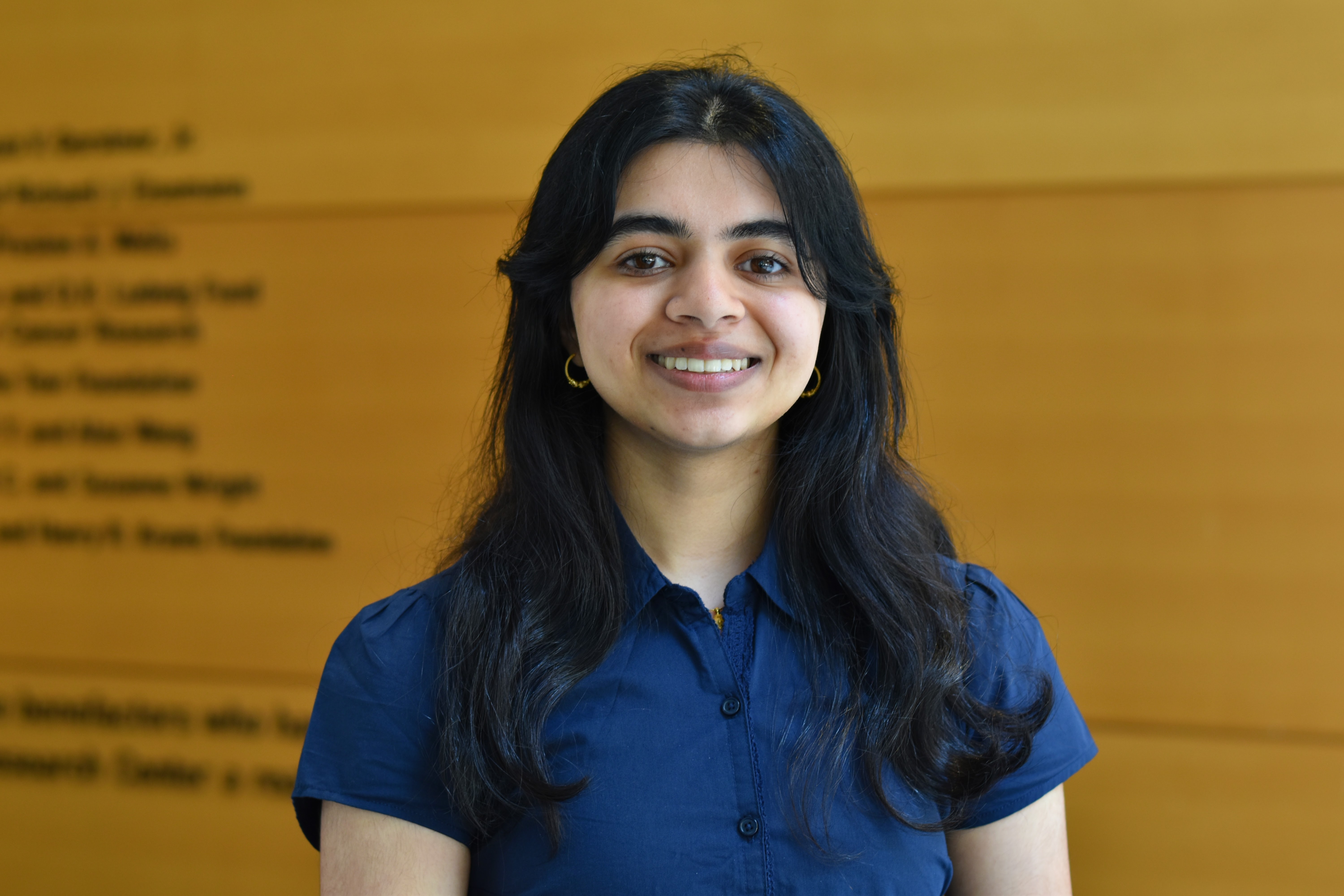
Savannah Phillips is an undergraduate researcher working in Assistant Professor Alex Xu ’s Spatial Biology lab and in Associate Professor of Physiology and Biophysics, Iman Hajirasouliha’s AI in Medicine and Computational Biology lab at Weill Cornell Medicine. Her work focuses on using computational methods to understand cellular interactions in skin diseases and developing deep learning models to predict embryo development trajectories.
Phillips is drawn to the interdisciplinary nature of computational biology and its potential to improve human health. She hopes to use computational models to uncover biological insights that can inform new therapies.
“I was excited and honored to hear that I received the NSF fellowship. I feel very grateful for the mentorship I've received throughout my undergrad, which has been instrumental in reaching this milestone.” Phillips said.
After graduation, Phillips plans to pursue a Ph.D. in bioinformatics and systems biology at UCLA, where she plans to continue developing computational approaches to study complex biological systems.
Cameron White
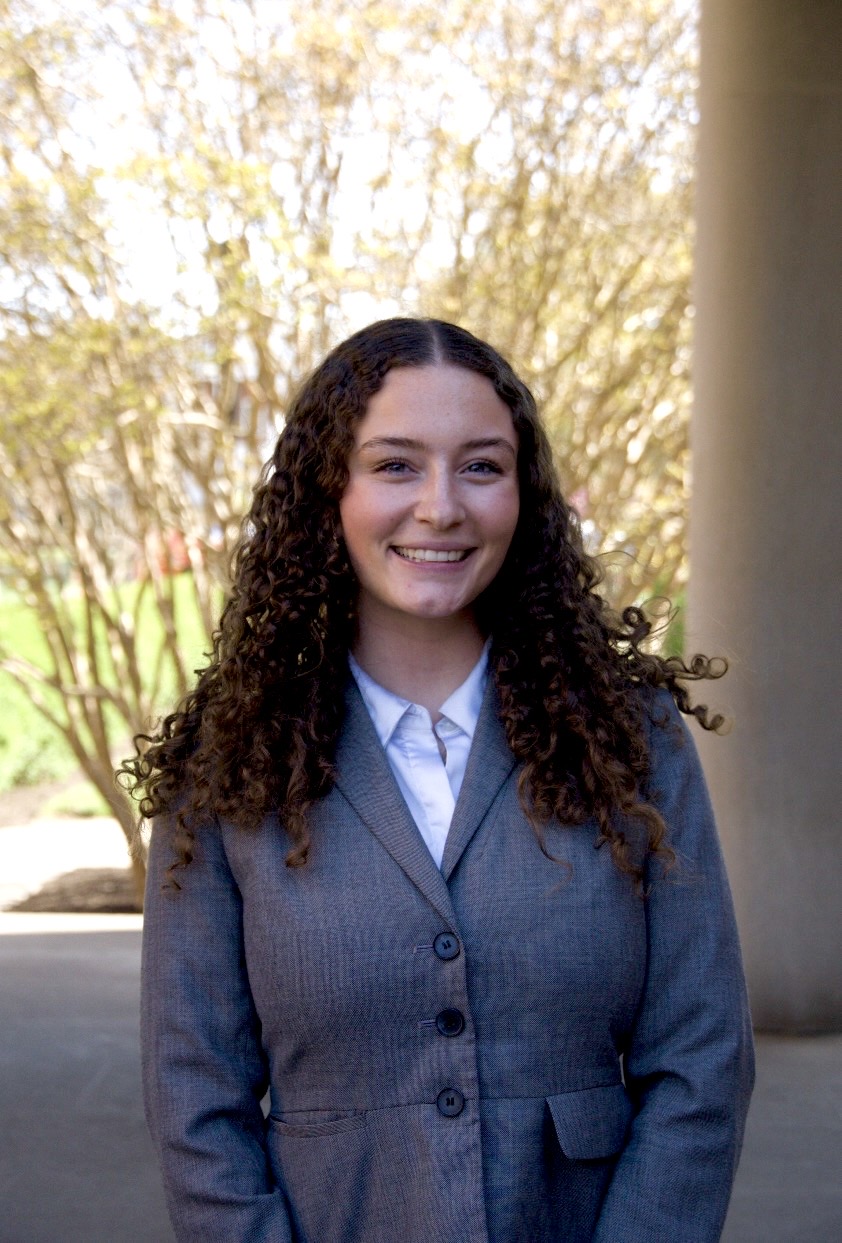
Cameron White is a bioengineering senior, a Banneker Key Scholarship recipient, and a member of the Gemstone Honors College. She conducts research in Professor Joe Huang’s lab and plans to pursue translational cancer research at the University of Pennsylvania, where she will focus on engineering synthetic cell adhesion molecules for CAR T cell therapy applications in liver cancer.
White’s passion for cancer research was shaped by personal experience after losing her father to cancer in 2015. Since then, she has been motivated to connect her research to the real-world impact it can have on patients and their families.
“I was absolutely ecstatic. It is a surreal feeling to have many years of hard work validated by the National Science Foundation,” White said. “I am excited by the opportunities that the NSF’s support during my graduate studies will give me to increase the impact of my work.”
White has also served as an undergraduate teaching fellow for biostatistics, where she led sessions on key statistical concepts such as hypothesis testing, ANOVA, regression, and probability modeling. In this role, she helped students build strong quantitative and data analysis skills for biomedical applications.
White expressed gratitude to her research mentors, including Dr. Joe Huang, Dr. Sumiao Pang, Dr. Joshua Mason, Dr. Jeffrey Winkles, Dr. Anthony Kim, Dr. Graeme Woodworth, Dr. Nikhil Pandey, Dr. Eman Mirdamadi, and Dr. Yanjin Zhang. She also thanked her family and friends for their continued support and encouragement.
In the future, White hopes to lead a team that develops high-impact advances in oncology therapeutics and helps translate them into clinical and commercial applications.
Published April 28, 2026
Related Stories
Stories / September 8, 2025
BIOE Announces 2025 Fischell Fellows at EPIC Retreat
Stories / February 17, 2025
Three BIOE Students Receive 2024-2025 MPower Graduate...
Stories / September 29, 2026
BIOE Celebrates Five Award Recipients at Ninth Annual 2026 EPIC...
Stories / August 4, 2026
Kuo Lab Hosts Future Bioengineers
Stories / July 13, 2026
Meet the Newest Cohort of the MARC Program

Stories / June 5, 2026
UMD Senior Joshua Mathew Wins 2026 Astronaut Scholarship

Stories / May 29, 2026
BIOE Announces Spring 2026 Instructional Impact Awards
Stories / May 28, 2026
Student Spotlight: Outstanding Junior Award Recipient Joel...
Stories / May 15, 2026
BIOE Students Recognized for Innovative Healthcare Solutions at...
Stories / May 13, 2026
2026 Invention of the Year: Engineering Projects Top List
