News Story
New Faculty Spotlight: Yu Gan
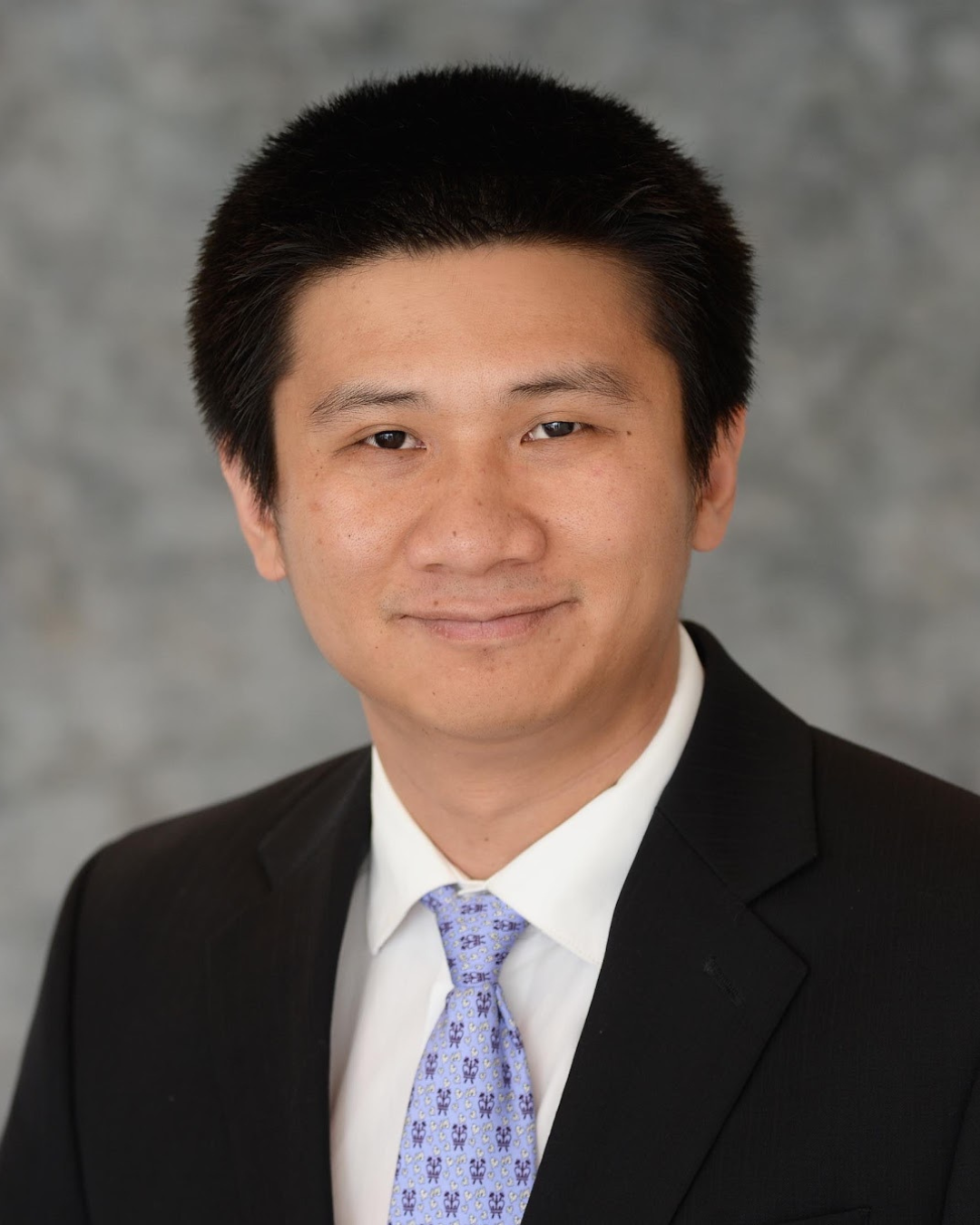
This summer, the Fischell Department of Bioengineering (BIOE) welcomed Yu Gan as as an Associate Professor. He also holds a joint appointment with the Artificial Intelligence Interdisciplinary Institute at Maryland (AIM), where his research brings together artificial intelligence, biomedical engineering, and data science to address challenges in healthcare, scientific discovery, and agriculture.
Since earning his Ph.D. in Electrical Engineering from Columbia University, he has been focusing on developing next-generation AI systems for biomedical imaging, experimental data analysis, and digital health. Specifically, his work emphasizes trustworthy methods, including machine learning, computer vision, large language models, and bioimaging, that improve how biomedical images and sensing data are collected, analyzed, and interpreted.
"I am excited to join the University of Maryland because of its exceptional commitment to interdisciplinary research and its vision for advancing artificial intelligence across science and engineering. The Fischell Department of Bioengineering provides an ideal home for this vision. I look forward to working with UMD colleagues and a broader clinical community to develop next-generation AI technologies that improve diagnosis, accelerate scientific discovery, and ultimately benefit patients."
-Yu Gan
His research has received support from the National Institutes of Health (NIH), the National Science Foundation (NSF), the U.S. Department of Agriculture (USDA), the Burroughs Wellcome Fund, and the Arnold & Mabel Beckman Foundation. Gan is the recipient of several honors and awards, including the NSF CAREER Award, an NIH R01 award, a USDA Data Science Award, and selection as a Scialog Fellow. His research program has also produced three issued U.S. patents and two pending patent applications.
"I am excited to join the University of Maryland because of its exceptional commitment to interdisciplinary research and its vision for advancing artificial intelligence across science and engineering," Gan said. "The Fischell Department of Bioengineering provides an ideal home for this vision. I look forward to working with UMD colleagues and a broader clinical community to develop next-generation AI technologies that improve diagnosis, accelerate scientific discovery, and ultimately benefit patients."
Gan leads the Computational Learning, Artificial Representation, and Imaging Technology (CLARITY) Lab , where his team turns biomedical and scientific data into actionable knowledge through AI systems built to be robust, explainable, and trustworthy. The lab's work also extends to multimodal foundation models, expanding on the core methods described above.
By integrating imaging, clinical, biological, and physical data, Gan's group aims to build AI tools that assist clinicians, accelerate scientific discovery, and support food quality, safety, and precision agriculture. Working across BIOE, AIM, and other colleges at UMD, he hopes to translate advances in artificial intelligence into real-world solutions that produce interpretable, trustworthy models from complex medical and multidimensional data.
Published August 18, 2026
Related Stories
Stories / October 21, 2025
AI Tool Reveals Gaps in Ancestry Reporting Across Biomedical...
Stories / October 5, 2026
Mueller Lab Receives Two NIH Grants to Advance Low-Cost Cancer...

Stories / September 16, 2026
New Faculty Members for 2026-27 Engineer for the Public Good
Stories / September 14, 2026
Project, Problem, Solution: MATRIX Interns Make an Impact
Stories / September 10, 2026
BIOE Announces Faculty Promotions and Appointments

Stories / September 3, 2026
UMD Convocation will honor five from the Clark School
Stories / August 4, 2026
Kuo Lab Hosts Future Bioengineers
Stories / June 25, 2026
Grand Challenges 2.0: Engineers Partner to Unlock Solutions

Stories / June 15, 2026
Alisa Morss Clyne Named Interim Chair of UMD Bioengineering
Stories / May 29, 2026
BIOE Announces Spring 2026 Instructional Impact Awards